Backpack’s SPCX Surpasses 10,000 Holders on Solana
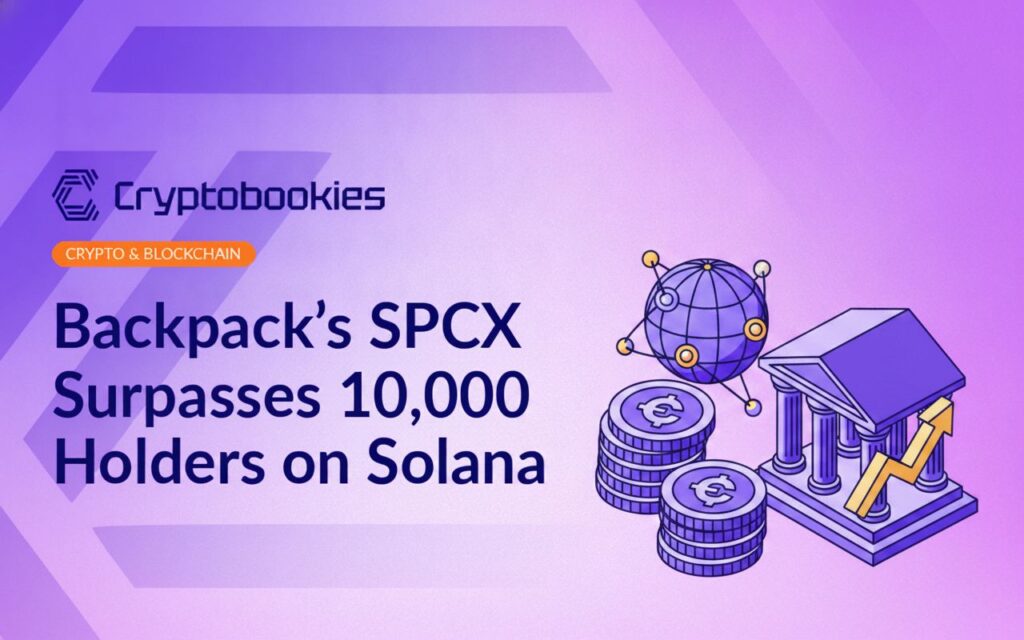
Backpack’s Tokenized SpaceX Token Surpasses 10,000 Holders on Solana – Redemption Model Differentiates It From Competing Onchain Products
Key Takeaways
- Backpack’s SPCX token has exceeded 10,000 onchain holders on Solana six days after launch.
- Cumulative onchain trading volume in SPCX has surpassed 350 million dollars since listing.
- SPCX represents a one-to-one backed tokenized SpaceX share redeemable into a traditional brokerage account.
- Rival product SPCXx by xStocks reports around 3,000 holders and redeems for cash rather than shares.
SPCX Crosses 10,000 Holders Within First Week of Trading
Backpack’s tokenized SpaceX share, issued under the ticker SPCX, has crossed 10,000 onchain holders on Solana, according to data surfaced by Solana trackers. The milestone was reached six days after the token began trading, coinciding with SpaceX’s Nasdaq debut.
The holder count places SPCX ahead of competing onchain SpaceX products. As of mid-week, the comparable SPCXx token issued under the xStocks brand recorded roughly 3,000 holders.
Trading activity has also been significant. According to liquidity partner Sunrise, cumulative onchain volume in SPCX has surpassed 350 million dollars since launch. Within a single 24 hour period on Tuesday, trading volume reached 108 million dollars.
Backpack reported that by Tuesday SPCX accounted for roughly half of all tokenized stock volume on Solana. Jupiter, a Solana-based trading venue, identified SPCX as the most traded SpaceX token across any blockchain during the same period.
How SPCX Is Structured as a Tokenized Security Entitlement
SPCX is issued as a Solana SPL token by Backpack Securities, the broker-dealer subsidiary of crypto exchange Backpack. Each token is backed one for one by a SpaceX share purchased and custodied in a United States broker-dealer account.
According to the product description, token holders can redeem SPCX for the underlying share. The share can then be transferred into a traditional brokerage account using ACATS and DTCC rails, which are standard systems for securities transfers in the United States.
Sunrise, a tokenization infrastructure provider built on Wormhole, routes issuance and liquidity of SPCX onto Solana.
The structure classifies SPCX as a tokenized security entitlement. This distinguishes it from synthetic or derivative instruments that track the price of a stock without granting rights to the underlying equity.
Backpack Highlights Differences With xStocks’ SPCXx Model
Backpack chief executive Armani Ferrante publicly emphasized what he described as a structural distinction between SPCX and competing products, particularly xStocks’ SPCXx token.
According to Ferrante, the primary difference lies in redemption rights. SPCX provides holders with the right to redeem one token for one underlying share, enabling transfer into a brokerage account. In contrast, he stated that xStocks’ model grants holders a right to cash equal to the share price rather than delivery of the share itself.
Backed Finance, the Switzerland-based issuer behind xStocks, tokenizes more than 60 United States equities by holding the underlying shares with a custodian and issuing transferable onchain claims. Under this structure, redemption results in a cash payout reflecting the share price, not transfer of the equity.
The xStocks SpaceX token launched on Solana on June 12, the same day as SPCX. It trades across venues including Bybit, Kraken, Coinbase International and BitMEX, alongside synthetic pre IPO perpetual products tied to SpaceX on those exchanges.
For users evaluating tokenized stock exposure, the practical difference lies in the exit path. SPCX allows redemption into a brokerage account such as Schwab or Fidelity through ACATS, while SPCXx settles in dollars.
Competitive Landscape for Tokenized SpaceX Exposure on Solana
SPCX entered a competitive market for onchain SpaceX exposure at launch. On the same day, Ondo Finance issued SPCXon, another tokenized SpaceX share routed through its regulated tokenization layer. Hyperliquid had already offered a USDC settled pre IPO perpetual tied to SpaceX since mid May.
Market demand initially exceeded available supply for some providers. Bitget Wattet, Bybit and Binance canceled their tokenized SpaceX allocation campaigns on June 12 after xStocks was unable to source sufficient shares to meet demand.
Backpack and Sunrise subsequently filled part of that demand gap. Sunrise reported that more than 350 million dollars in cumulative SPCX volume has been processed since launch. SPCX also became part of the Solana Foundation’s Frontier Traders campaign, an institutional tier liquidity program with a 500 million dollar 30 day volume threshold.
Regulatory Context for Tokenized Public Equities
Tokenized exposure to company shares operates within a developing regulatory framework. Following SpaceX’s Nasdaq listing, SPCX represents a digital version of a registered public security rather than a private company claim.
The United States Securities and Exchange Commission is preparing an innovation exemption framework covering tokenized representations of existing registered equities. SEC Commissioner Hester Peirce clarified in May that the planned exemption would apply only to digital representations of registered stocks and would not extend to synthetic stock exposure instruments.
SPCX is issued through a United States broker-dealer subsidiary, placing it closer to the regulatory pathway described for tokenized securities. By contrast, some alternative structures rely on offshore special purpose vehicles.
Separately, Anthropic warned in May about unauthorized tokenization of private company shares, highlighting risks when tokenized products lack an explicit relationship with the underlying issuer.
Our Assessment
Backpack’s SPCX token has reached more than 10,000 onchain holders and over 350 million dollars in cumulative volume within its first week, positioning it ahead of rival Solana based SpaceX tokens by holder count. The product’s defining feature is its one to one backing with redeemable shares that can be transferred into traditional brokerage accounts. This structural difference from cash settled models such as SPCXx places SPCX within the emerging framework for tokenized registered equities in the United States and shapes how users can access or exit their exposure.