Iran Seeks Bitcoin Toll for Strait of Hormuz Oil Transit
Iran Demands Bitcoin Toll for Strait of Hormuz Transit – Ceasefire Move Links Oil Shipping to Crypto Payments
Key Takeaways
- Iran intends to charge a 1 US dollar per barrel toll in Bitcoin for ships passing through the Strait of Hormuz during a two week ceasefire.
- The Financial Times reported that vessels must share cargo data and pay in Bitcoin within seconds to secure safe passage.
- The Strait of Hormuz handled around 20 percent of global oil flows before the war, making it a critical maritime chokepoint.
- Following the report, Bitcoin’s price rose to 73,000 US dollars from the high 60,000 range.
Financial Times Report Details Proposed Bitcoin Toll
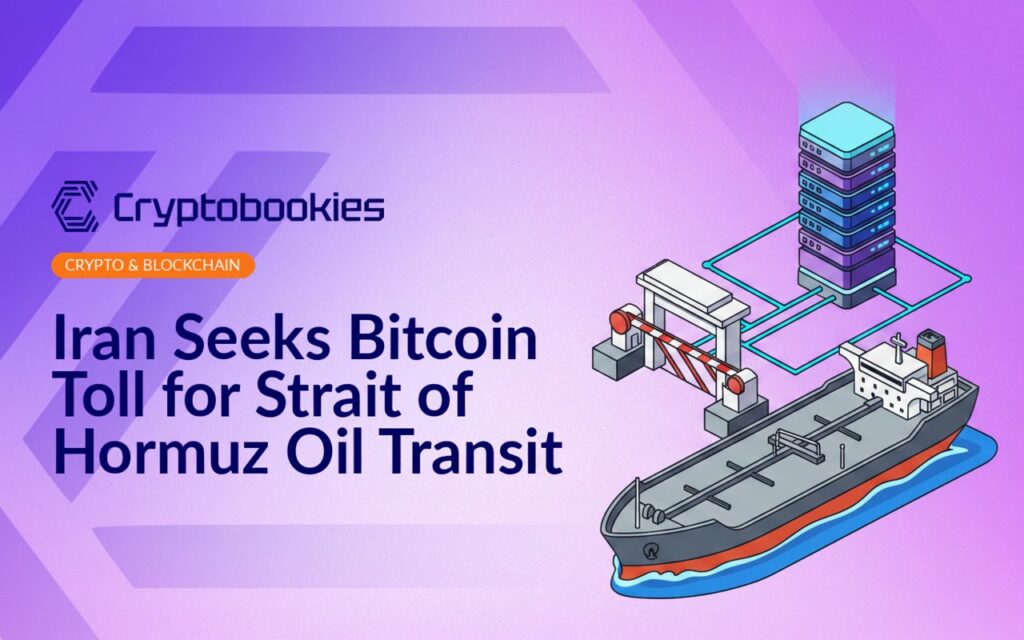
The Financial Times reported on April 8 that Iran plans to charge ships a toll for passing through the Strait of Hormuz during the current two week ceasefire in the war involving the United States, Israel, and Iran. According to the report, the fee would amount to 1 US dollar per barrel of oil and must be paid in Bitcoin.
Hamid Hosseini, spokesperson for Iran’s Oil, Gas and Petrochemical Products Exporters’ Union, told the Financial Times that vessels would be required to submit inventory data by email. After Iran completes its assessment, ships would be given a short window of a few seconds to transfer the Bitcoin payment. The report states that this structure is intended to prevent tracing or confiscation linked to sanctions.
The Strait of Hormuz is described as one of the most important oil maritime transit chokepoints globally. Before the war, roughly 20 percent of global oil flows passed through the strait, supplying markets in Europe, Asia, and other regions. Control over this route therefore carries direct implications for international energy trade.
Geopolitical Context and Control of the Strait
The report outlines Iran’s strategic position in the strait. Iran maintains control through long range missiles, underwater mines, and attack drone technologies. During the conflict, the ability to disrupt or threaten shipping traffic has been presented as a significant leverage point.
US President Donald Trump said earlier that a joint venture with Iranian leadership had been discussed as a way of securing the strait. In a statement to ABC, he described the idea as a potential method of ensuring security. However, after reports of a toll surfaced, Trump stated that Iran “should not charge fees” and warned that such actions should stop if they were taking place.
Saudi Arabia also reacted. Ali Shihabi, described as a commentator close to the Saudi royal court, stated that allowing Iran any form of control over the strait would be a red line and emphasized that unimpeded access should remain the priority.
The article further cites Trump acknowledging the difficulty of fully securing the strait from small scale attacks. He noted that relatively low cost actions, such as placing a mine or firing from shore, could disrupt safe passage. This highlights the economic imbalance between the cost of attacking vessels and the cost of defending them.
Why Bitcoin Was Named as the Payment Method
According to the report, Iran’s decision to request Bitcoin instead of dollars, yuan, or gold reflects the country’s position under heavy US sanctions. The United States has restricted Iran’s access to Western payment systems, limiting its use of dollar based financial infrastructure.
The article argues that relying on another national currency would increase dependency on a foreign power. Physical gold would require transport or settlement through financial intermediaries, which could reintroduce sanction risks. In contrast, Bitcoin transactions occur on a decentralized blockchain network that operates internationally.
The report states that Bitcoin payments would allow for quick digital settlement. It also notes that Bitcoin holdings can be stored in multi signature cold storage setups that require multiple keys for withdrawals. Such arrangements can distribute keys across locations, complicating potential confiscation.
Iran has previously been reported to hold up to 10 percent of global Bitcoin mining capacity at various times, according to the article. This suggests prior operational experience with mining and securing the asset.
Market Reaction and Operational Challenges
Following publication of the Financial Times report, Bitcoin’s price increased to 73,000 US dollars from levels in the high 60,000 range. The development drew attention within the cryptocurrency sector and in international media.
If the toll were implemented, oil tankers would need to obtain Bitcoin in amounts potentially reaching millions of dollars per shipment, depending on cargo size. However, the article notes that most Western Bitcoin exchanges are prohibited from conducting business with Iran due to sanctions. Shipping companies would therefore need to source Bitcoin in jurisdictions that permit such transactions.
The report suggests that this could involve exchanges in eastern markets. Increased demand in those regions could influence local pricing and mining activity. The article also mentions that if eastern mining capacity remains significant, attempts to censor specific Bitcoin transactions would be difficult.
Implications for International Oil Trade
Countries that rely heavily on oil shipments through the Strait of Hormuz include China, Japan, and European nations, according to the article. A Bitcoin denominated toll would introduce a cryptocurrency component into routine energy logistics.
Such a system would require shipping operators and energy traders to integrate Bitcoin acquisition and transfer into their operational workflows. It would also connect geopolitical risk in a major oil corridor with cryptocurrency market activity.
At the same time, political reactions from the United States and Saudi Arabia indicate that the proposal faces diplomatic resistance. Whether the toll remains in place or is revised would depend on ongoing negotiations and the broader conflict environment, as described in the report.
Our Assessment
The reported plan to charge a Bitcoin based toll for passage through the Strait of Hormuz links a major global oil transit route with cryptocurrency settlement. The proposal emerged during a temporary ceasefire and triggered immediate market reaction in Bitcoin’s price. Given the strait’s role in handling around one fifth of global oil flows before the war, any payment requirement tied to transit has direct relevance for energy markets, shipping companies, and cryptocurrency liquidity. The situation combines sanctions policy, maritime security, and digital asset infrastructure within a single geopolitical development.