

Ben Youngs explores rugby brain injury risks in emotional documentary

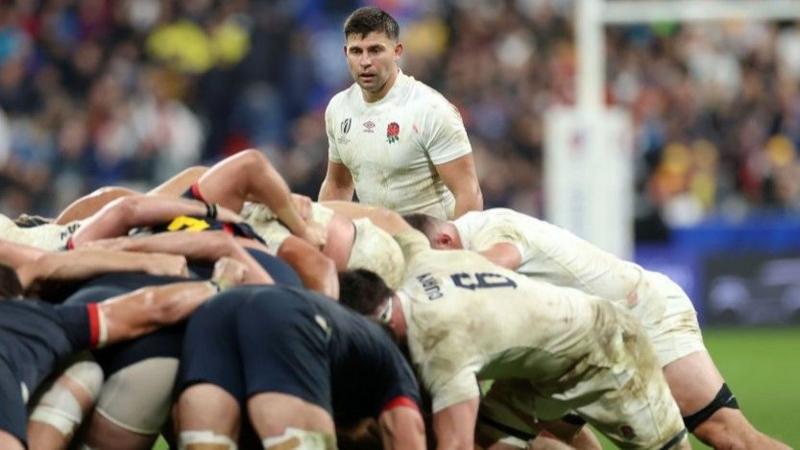
England’s most-capped men’s player Ben Youngs has confronted the reality of brain injuries and concussion in rugby union during an emotional new BBC documentary.
The toll on legends
The Leicester Tigers icon admitted he broke down in tears while filming with former team-mate Lewis Moody.
Moody, affectionately known as ‘Mad Dog’ during his playing days, recently discussed his diagnosis of motor neurone disease (MND).
While there is no definitive scientific evidence linking MND to repeated concussion, the encounter forced a re-evaluation of the sport’s physical toll.
The 35-year-old confessed he had to step away during the filming to compose himself after seeing his friend.
Asking difficult questions
Youngs initially felt sceptical about peering “behind the curtain” of the game he has played professionally for nearly two decades.
He found himself questioning whether the sport his son plays every Sunday remains safe enough.
However, the scrum-half realised he could not let his love for rugby blind him to the necessity of investigating long-term health issues.
The programme, Ben Youngs Investigates: How Safe Is Rugby?, aims to uncover what the sport is doing to combat these risks.
Cheating the system
The documentary highlights the evolution of player welfare but also exposes past failures in protocol.
Former England wing Anthony Watson makes a startling admission regarding the 2017 British and Irish Lions tour.
Watson reveals he “cheated” the Head Injury Assessment (HIA) system to return to the field during the second Test.
The back-three player memorised the specific words he knew he would be asked to repeat to pass the exam.
The World Cup confession
Attitudes are shifting, evidenced by Ireland’s Garry Ringrose withdrawing himself from a 2025 Lions Test due to symptoms.
However, Youngs admits that during his own career peak, he would not have taken such precautions.
When asked by former flanker Tom Croft about the 2019 Rugby World Cup final, the veteran half-back gave an honest answer.
He confirmed he would not have pulled out of the biggest game of his life if he had felt concussion symptoms.
“I would have dealt with the consequences afterwards,”
Youngs is now left wrestling with the difficult question of whether his generation’s attitude was part of the problem.