

England Six Nations slide analysed as Borthwick urges perspective on form

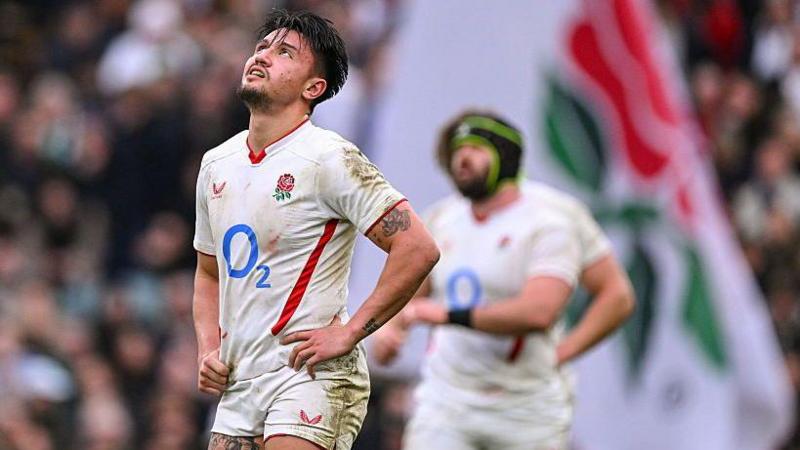
England head coach Steve Borthwick has called for a sense of perspective following a 42-21 defeat by Ireland that confirmed a second consecutive Six Nations loss for his side.
The Red Rose boss insists that neither the hype nor the criticism surrounding his team currently reflects reality.
“Two weeks ago, after 12 wins on the bounce, people were saying we were the best team in the world, and now we are all sorts of things,” Borthwick told BBC Sport.
“Neither of these are true.”
However, the downturn in form for the national side has been undeniably steep and sudden.
After a year-long winning streak, England have suffered back-to-back tournament defeats.
They were swatted aside by Scotland at Murrayfield just seven days prior to their heavy trouncing by the Irish.
We analyse why the bubble has burst so emphatically for Borthwick’s men.
Re-evaluating the 2025 winning run
The plea for a middle ground between praise and criticism is not merely a defensive mechanism from the coaching staff.
Even before the Six Nations began, management attempted to temper predictions that this squad was rapidly becoming world-beaters.
Retrospective analysis suggests the 12-match winning streak may have over-inflated external expectations.
While the run included a standout victory over New Zealand last November, significant caveats remained.
The All Blacks delivered a curiously listless performance that ultimately led to the sacking of head coach Brett Robertson.
Furthermore, two Test wins in Argentina came against a Pumas side weakened by British and Irish Lions selection and resting frontline stars.
Victories over France and Scotland in the previous year’s championship were tight affairs that could easily have gone the other way.
While England did superbly to win those contests, the current campaign has demanded a higher level of performance that has been found wanting.
Aerial dominance neutralised by rivals
For much of 2025, it appeared that Borthwick had discovered a tactical edge.
Following rule changes regarding the escorting of chasing players, the aerial contest opened up significantly.
England were initially the quickest to exploit this, utilising hard chases and high jumps to claim possession deep in opposition territory.
However, in an era of intense data analysis, no tactical advantage remains unchallenged for long.
Opposition coaches have wised up to the strategy.
Both Scotland and Ireland fielded the backfield barrage effectively, with catchers outperforming England in the air.
Energised support players were consistently well-positioned to scoop up loose ball from any spills.
With their primary tactic neutralised, the team appeared to lack either a clear alternative or the nerve to switch strategies mid-match.
Scotland capitalised by moving the ball wide to stretch the defence, while Ireland punched holes through the middle with high-tempo offloads.
Borthwick’s side could not find their own style to fit the contest.
Injury woes hamper Borthwick’s plans
The case for the defence has not been helped by a growing casualty list.
As they have chased high balls, England have been forced to do so with clipped wings.
Immanuel Feyi-Waboso remains a prime example of the attacking threat currently missing from the ground game.