

FIS president defends ‘not easy’ decision to invite Russian athletes

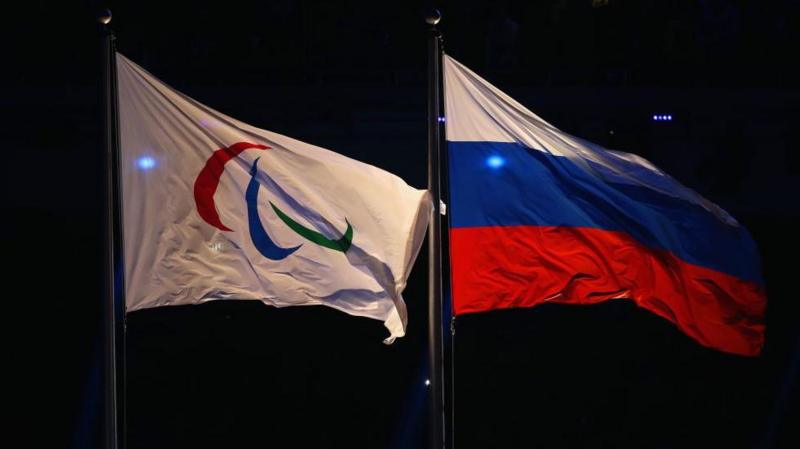
International Ski and Snowboard Federation president Johan Eliasch admits the decision to invite Russian and Belarusian athletes to the Milan-Cortina Winter Paralympics “has not been easy”.
Six competitors from Russia and four from Belarus are set to participate in alpine skiing, cross-country skiing and snowboarding at the Games, which begin on 6 March.
The International Paralympic Committee (IPC) had previously lifted its ban on athletes from the two nations in September.
Legal rulings force federation’s hand
While individual governing bodies, including the FIS, initially refused to lift their own sanctions, a successful appeal to the Court of Arbitration for Sport (Cas) overturned that stance.
Consequently, the 10 athletes have been granted bipartite commission invitations to compete in Italy.
Speaking to BBC Sport, Eliasch acknowledged the complexity of the situation.
“It has not been easy. What we’re dealing with here is an issue that is divisive, where people have different feelings depending on where they come from. It’s something that we have to respect.”
The federation chief emphasised the distinction between individuals and state politics.
“Athletes can’t choose where they were born. On the other hand, they can’t be used for PR purposes in their home countries to promote the war.”
“It’s our duty to make sure that athletes are not weaponised for political purposes.”
Ukraine condemns ‘outrageous’ return
The inclusion of these athletes will mark a significant shift, as the Russian flag has not been flown at a Paralympic Games since Sochi 2014.
Previous bans were instated due to the country’s state-sponsored doping programme and subsequently extended following the 2022 invasion of Ukraine.
Ukrainian sports minister Matvii Bidnyi strongly criticised the move earlier on Wednesday.
“The flags of Russia and Belarus have no place at international sporting events that stand for fairness, integrity and respect,” Bidnyi stated on social media.
“These are the flags of regimes that have turned sport into a tool of war, lies and contempt.”
Ukraine has also secured bipartite slots across three sports for the upcoming Games.
Strict vetting processes applied
Bipartite commission invitations are reserved for elite competitors who may have missed qualification opportunities due to “extraordinary circumstances”.
The IPC allocates these slots based on recommendations from international federations such as the FIS.
Eliasch insisted that despite the controversy, the process has adhered to legal requirements.
“It is difficult, and in our case in the end, the courts decided the outcome.”
“Everything has been done by the book. We’ve had strict vetting schemes of the people who do participate to make sure they don’t have any affiliation with the military.”