

Rugby brain injury crisis deepens as former stars reveal life-altering toll

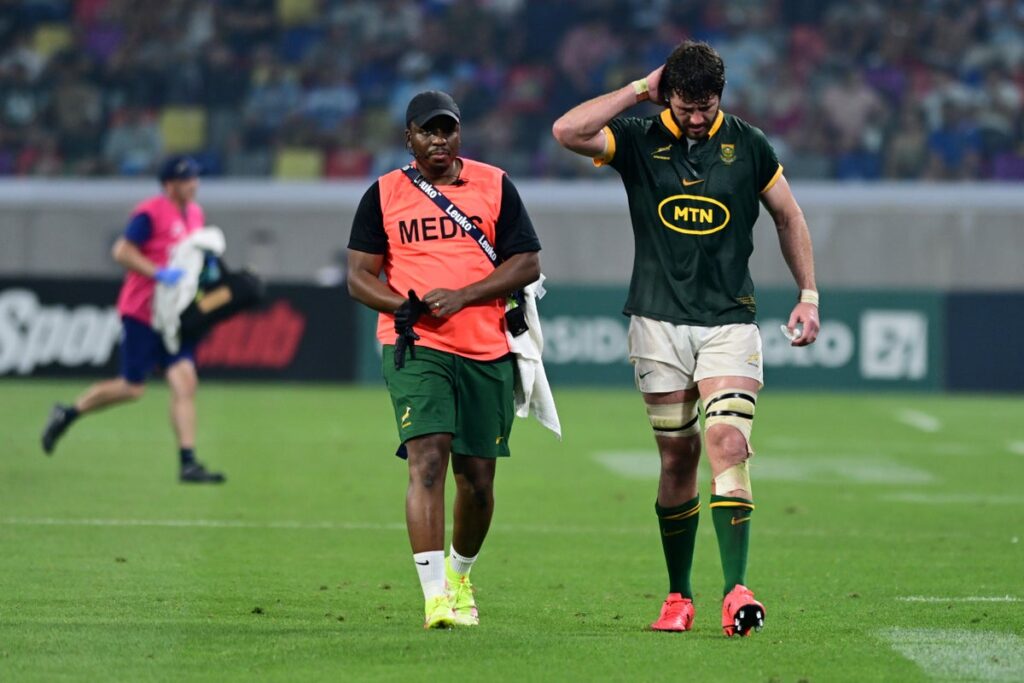
Former internationals Alix Popham and Kat Merchant have detailed the severe impact of brain injuries on their lives as rugby union confronts a major legal challenge regarding player welfare.
Popham, who won 33 caps for Wales, was diagnosed with early-onset dementia six years ago.
Medical experts estimate the retired back-rower sustained more than 100,000 sub-concussions during a 14-year professional career.
The 44-year-old now utilises a hyperbaric chamber daily and strictly limits his working hours to manage his symptoms.
Living with a ‘Nokia battery’ brain
The former Newport Gwent Dragons star describes his cognitive limitations vividly, comparing his energy levels to obsolete technology.
“I look at my brain as an old Nokia battery – I’ve only got so much bandwidth,” Popham explained.
“I’ve had to pull back and recognise that. Before that, I didn’t know I had this issue, so I’d just plough on, and that would be where I’d have this explosion.”
Popham admits that while understanding his condition has helped, his daily reality remains far from perfect.
Merchant’s fight after 2014 triumph
Kat Merchant, a World Cup winner with England in 2014, retired from the sport immediately following that tournament victory.
The former Worcester winger suffered her first significant concussion as a 16-year-old in the Premiership.
However, a seizure during a match in 2013 marked a terrifying turning point for the English speedster.
“My family were there and I didn’t recognise them,” Merchant said regarding the incident.
“I was completely all over the place. I didn’t see it, so didn’t know and didn’t get the magnitude of it.”
Following that injury, it took Merchant nearly four months to be physically able to exercise again.
Legal action looms over the sport
These personal testimonies emerge as rugby authorities prepare for a high-profile court case involving hundreds of former players.
Claimants are arguing that the sport’s governing bodies failed to take reasonable action to protect players from permanent injury caused by repetitive concussive blows.
Current protocols have since been tightened, with mandatory stand-down periods for players who fail Head Injury Assessments (HIA).