

Skeleton dominance: The secret war fueling Team GB’s record success

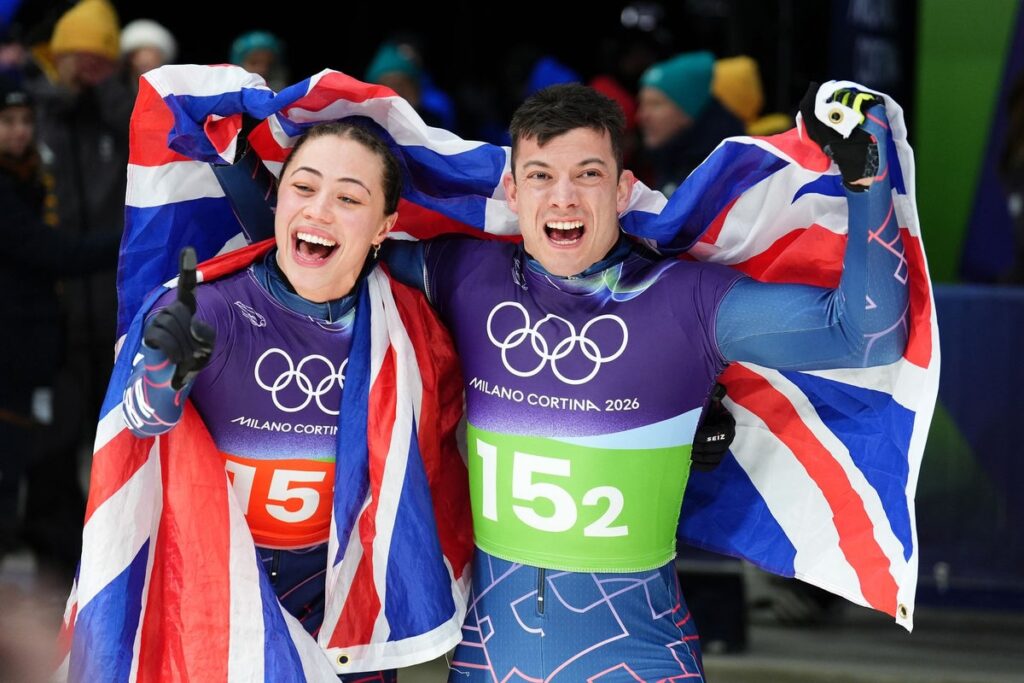
Matt Weston has etched his name in history by becoming Britain’s first double Winter Olympic medallist, spearheading a golden skeleton campaign fuelled by high-tech innovation and sporting espionage.
The 29-year-old secured the men’s individual title on Friday before adding a mixed team gold alongside Tabby Stoecker on Sunday.
This remarkable feat cements the squad as the most successful nation in the discipline’s history, now boasting 11 Olympic medals with five being gold.
Yet, this global dominance hails from a country possessing zero ice tracks and where athletes spend mere hours annually on actual slides.
The ‘Cold War’ of winter sport
Success is instead manufactured at the University of Bath, utilising state-of-the-art push tracks and aggressive aerodynamic innovation.
In a sport defined by fractions of a second, the battle for supremacy has evolved into a technological arms race.
Dr Kate Baker, UK Sport’s director of performance, admits the rivalry has intensified into something resembling a spy thriller.
It isn’t quite to the extent of hiding in bushes to spy on other teams, but espionage between nations is very real. It’s big business for some people, and we know how powerful sporting success is for a nation.
We are an extraordinary nation in the way that we have consistently punched above our weight. Everyone wants to know what we’re doing.
Dr Kate Baker, UK Sport Director of Performance
The challenge for the British contingent is to constantly evolve their hardware to surprise rivals who monitor their every move.
Power over ice
Without a home circuit, the British focus shifts entirely to explosive power and “marginal gains” in equipment design.
The squad spends the vast majority of the year in the gym or on concrete push tracks, prioritising the start phase above all else.
Amy Williams, the Vancouver 2010 gold medallist, highlights how the team recruits elite sprinters to compensate for the lack of ice time.
We do not have that obvious thing in front of us, an ice track, so we have always gone out and tried to get the world’s best pushers.
We do so much hard training in the summer months for that pure speed, power, explosiveness off the block. The combination of already being powerful and fast at the top gives you that good edge.
Amy Williams, Olympic Champion
This strategic pivot has successfully redeemed the programme following a medal-less outing at the Beijing Games.
With Stoecker also finishing fifth in the women’s event, the ‘trackless’ nation has once again proven that laboratory precision can beat geographical advantage.