

Winter Games agony: Team GB suffer heartbreak as medal wait drags on

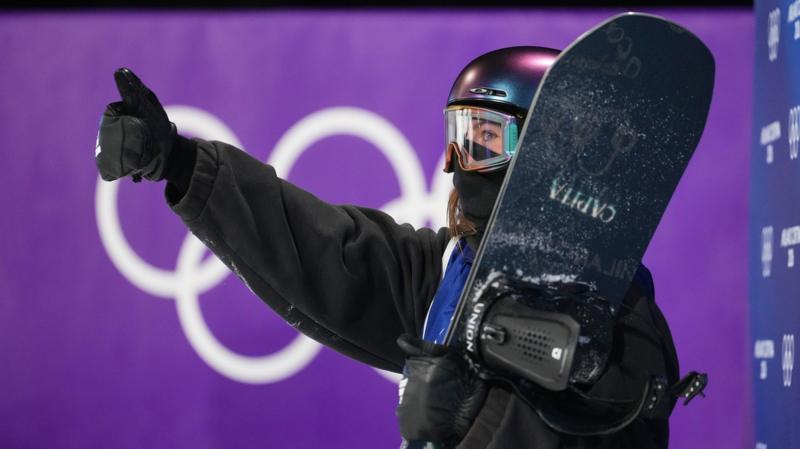
The wait for a podium finish continues in excruciating fashion for Great Britain’s athletes.
Great Britain are still searching for their first medal of the Winter Olympics after suffering three agonising fourth-place finishes, piling pressure on a squad targeting a record podium haul.
For years, the nation has punched significantly above its weight on the snow and ice.
Despite a distinct lack of mountains, Britain has consistently produced world champions and X Games winners.
Yet right now, those punches are landing firmly in the opposite direction.
Many analysts expected the British contingent to be on the board by now, with forecasts predicting at least three medals at this stage.
Instead, the tally remains stubbornly at zero.
The curse of fourth place
The campaign has been defined by near misses rather than glorious failures.
Freestyle skier Kirsty Muir, snowboarder Mia Brookes, and the mixed curling duo of Bruce Mouat and Jen Dodds have all finished in the dreaded fourth spot.
Adding to the frustration, figure skaters Lilah Fear and Lewis Gibson saw their bronze medal hopes evaporate after a solitary error in the ice dance.
These results have highlighted just how cruel the margins can be at the pinnacle of winter sport.
Muir, for instance, missed out on a slopestyle bronze by a heartbreaking 0.41 points.
Had the Aberdeen-born skier not squatted on a final run landing, she would likely have secured a podium spot.
High risks and fine margins
The margins were equally tight for Mia Brookes.
The teenage snowboard sensation knew she needed something spectacular on her final big air run to break into the top three.
She attempted a competition-first backside 1620 trick, involving four-and-a-half rotations.
However, the 17-year-old over-rotated at the crucial moment.
A clean landing would almost certainly have guaranteed a medal.
Sometimes, however, these fractions work in Britain’s favour.
At the Sochi Games in 2014, Jenny Jones secured the nation’s first-ever Olympic medal on snow by just 0.25 points.
Jones, now a BBC Sport pundit, reflected on the psychological toll of these moments.
“I could have very much been in fourth,” Jones admitted.
“The girl who came fourth, she did a bigger trick than me, but she dragged her hand. On the day, I had done it cleaner. On any other day, she might have beaten me.”
“There’s lots more going on with the Olympics, mentally. It is that psychological element, it’s a mindset.”
Investment under scrutiny
Britain’s best return from a Winter Games stands at five medals, achieved in both Sochi and Pyeongchang.
Before this event, UK Sport set an ambitious target of up to eight medals.
While that upper limit now looks unlikely, a record-breaking tournament remains mathematically possible.
However, Dame Katherine Grainger, chair of the British Olympic Association, has warned that the team’s performance is being watched closely.
This scrutiny follows a substantial £25.5m investment ploughed into winter sports over the last four-year cycle.
“Because it’s public money, there’s a responsibility for all of us to make sure the money that goes in is paid back,” Grainger told BBC Sport.
“We want to see great performances, inspirational performances, and that there’s good value for money. I think the results will be brilliant and it will justify the investment.”
Despite the slow start, the British camp remains adamant that their medal hopes are far from lost.