

2026 World Cup produces record eight draws as major nations stumble

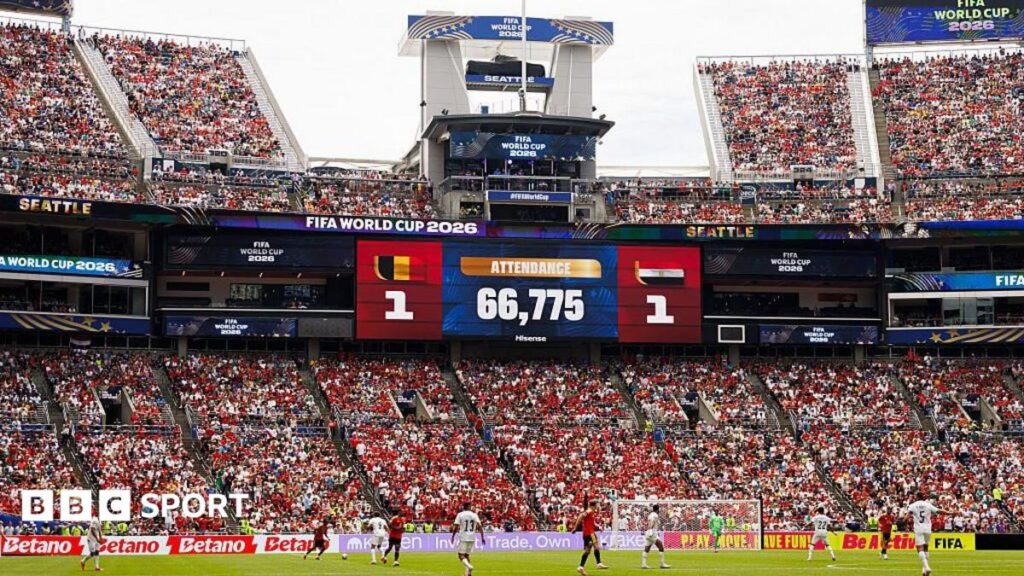
The 2026 World Cup has delivered a record-breaking eight draws in its first 16 matches across North America, as traditional powerhouses from Europe and South America struggle to secure opening victories.
The expanded 48-team tournament has seen a remarkably cautious start from competing nations.
Monday alone witnessed an unprecedented four stalemates occurring on a single day.
It marked the first occasion since June 1958 that four fixtures at the global showpiece finished without a winner.
Expanded format reduces group stage jeopardy
No previous edition of the tournament has ever recorded this many tied matches at the identical stage.
The current tally quickly surpassed the previous high of seven set in 1974, 1982 and 1986.
A major contributing factor to this conservative approach appears to be the newly expanded tournament structure.
With 32 of the 48 participating nations progressing to the knockout stages, the penalty for failing to win early on is significantly diminished.
Mathematical projections suggest that teams could successfully navigate the group phase with just three points from three drawn fixtures.
European and South American giants feel the heat
The sluggish start has been particularly noticeable among the traditional footballing elite.
Seven of the first 10 competing European sides failed to claim maximum points in their opening tests.
Only Germany, Scotland and Sweden emerged victorious against significantly lower-ranked opposition.
The situation is even bleaker for Conmebol representatives, as not a single South American nation has managed to win.
Five-time champions Brazil were held by Morocco, while Uruguay could only manage a 1-1 result against Saudi Arabia.
Climatic conditions present fresh challenges
Searing temperatures across the host nations are adding another layer of difficulty for heavily favoured squads.
Belgium contested their lunchtime draw against Egypt in Seattle with the thermometer climbing above 30C.
Manager Rudi Garcia refused to blame the extreme weather for the result, but noted its detrimental effect on the playing surface.
“The grass really needed watering. It was very dry and as a result it was slowing the ball down.”
Similarly, Switzerland head coach Murat Yakin pointed toward poor finishing rather than the climate following a frustrating tie with Qatar.
The Swiss outfit generated a staggering 26 shots during the contest but failed to capitalise on their dominance.