

Adidas reveals aerodynamic four-panel Trionda ball for 2026 World Cup

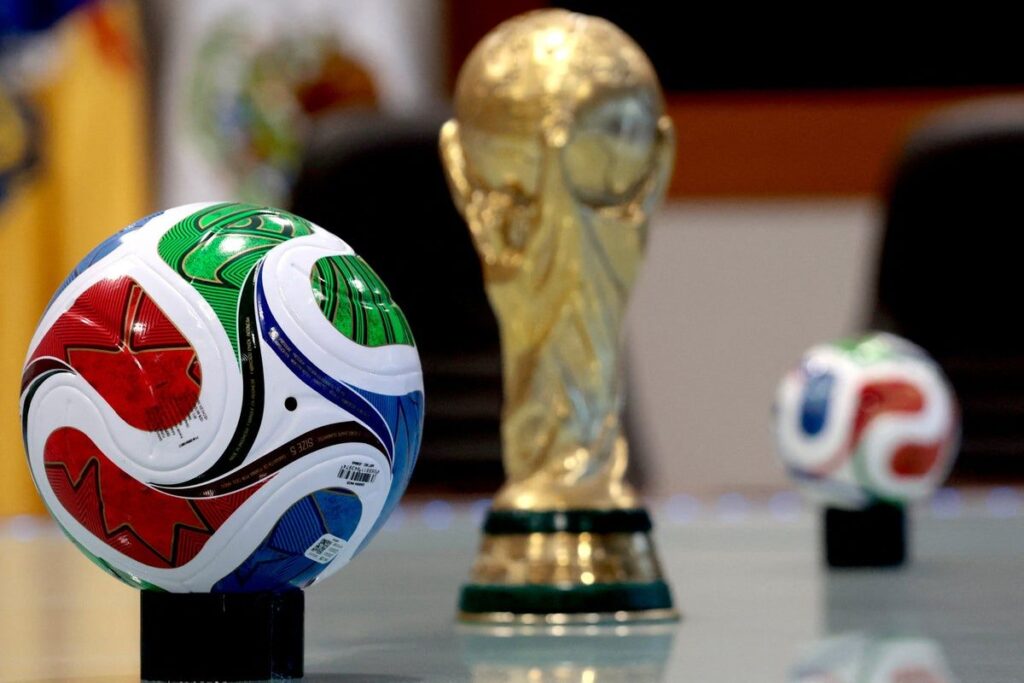
Adidas has revealed the Trionda, a revolutionary four-panel match ball designed for the 2026 World Cup in North America following extensive aerodynamic testing.
Engineers in Japan and England have spent months analysing the new design in wind tunnels to measure drag, lift and side forces.
These trajectory simulations are crucial for predicting how the equipment will behave in high-pressure match situations this summer.
Radical new panel design
The Trionda marks a significant departure from tradition as the first four-panel ball in men’s tournament history.
Its minimalist construction features red, blue and green graphics alongside maple leaf, star and eagle motifs.
These colourful symbols deliberately represent the three tournament co-hosts: Canada, the United States and Mexico.
Avoiding the Jabulani trap
With so few panels, aerodynamic experts are carefully monitoring whether the manufacturer has made the surface too smooth.
A lack of texture previously caused major issues during the 2010 competition in South Africa.
The notorious Jabulani ball from that year produced sudden dips and swerves that made life miserable for goalkeepers.
Players demand consistency to ensure the global showpiece does not feel like an unpredictable science experiment once the ball is in the air.
A long history of innovation
The German sportswear giant has supplied official tournament balls continuously since 1970.
Technology has advanced significantly since the inaugural 1930 tournament, which famously featured heavy, water-absorbing leather alternatives.
The upcoming summer spectacle will rely heavily on these modern aerodynamic calculations to dictate the narrow margins between a spectacular goal and a costly miss.