

Fifa confirms VAR will punish World Cup divers in specific scenario

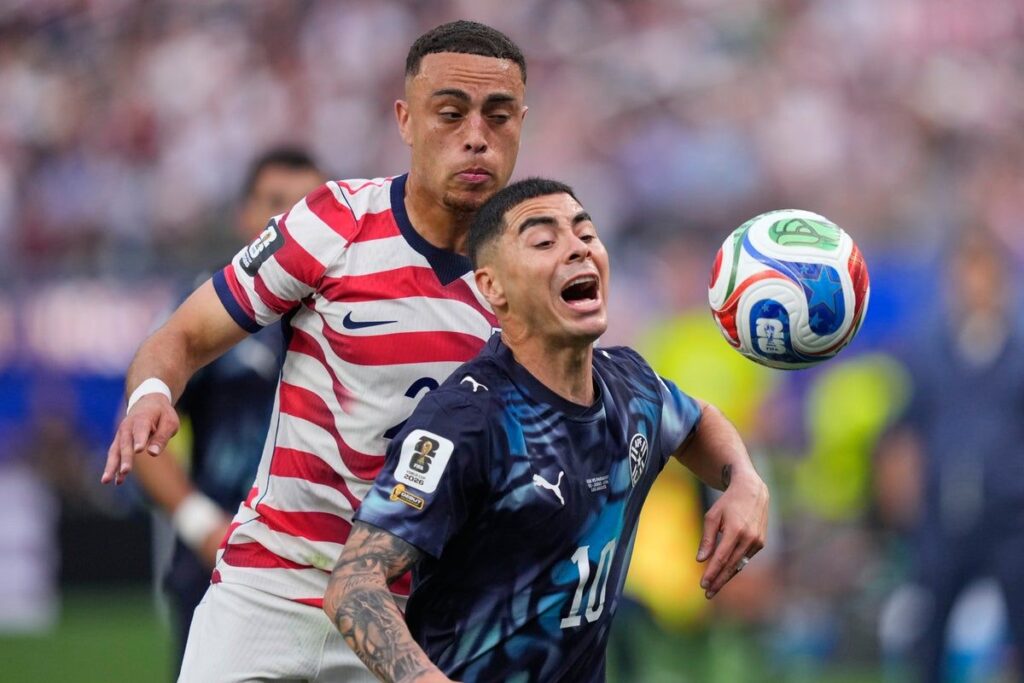
VAR will continue to retrospectively punish players for diving at the 2026 World Cup, provided the defending player has been incorrectly shown a card.
The clarification follows a confusing incident during the United States’ opening tournament fixture against Paraguay in Los Angeles on Friday.
Paraguayan forward Miguel Almiron went to ground under pressure from US captain Tim Ream near the edge of the penalty area.
Dutch referee Danny Makkelie initially awarded a free-kick to the South American side and booked the defending centre-back.
Mistaken identity loophole applied
Television replays quickly confirmed that the American defender made absolutely no contact with the attacker.
The former Newcastle United winger had thrown himself to the floor to deliberately deceive the match official.
Play was halted moments later when the stadium screens displayed a message confirming a video review for mistaken identity.
Makkelie consulted the pitchside monitor before rescinding the initial caution and issuing a yellow card to the simulating forward instead.
Fifa satisfied with unique intervention
Video technology protocols strictly prohibit interventions solely to review or correct standard yellow cards.
Overturns are typically reserved for goals, penalties, straight red cards, and traditional cases of mistaken identity.
The official regulations define mistaken identity as instances where an official penalises an offence but sanctions the wrong individual.
Football’s global governing body is understood to be satisfied with how the officials uniquely applied this rule to combat simulation.
Administrators only noted that play should have restarted with a contested drop ball rather than a free-kick for the host nation.
Future implications for simulation
Attackers attempting to win cheap free-kicks now risk retrospective cautions via the video booth throughout the remainder of the competition.
However, this technological safety net only applies if the referee mistakenly issues a card to an innocent opponent.
If no disciplinary action is initially taken against the defending player, video assistants have no jurisdictional grounds to review the dive.