

Fifa introduce new semi-automated offside technology for 2026 World Cup

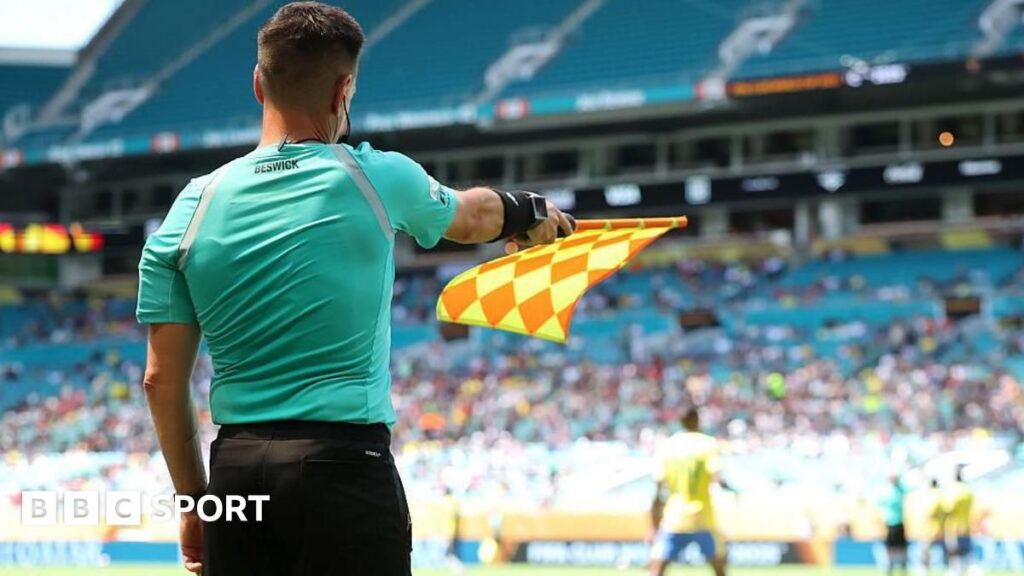
Fifa will introduce advanced semi-automated offside technology at the 2026 World Cup to deliver faster decisions and significantly reduce the reliance on delayed flags.
The new system will send a real-time audio alert to the assistant referee if an attacker is more than 10cm beyond the last defender.
Previous iterations of the software, trialled at the Club World Cup and Intercontinental Cup, only triggered notifications for margins greater than 50cm.
Putting an end to the delayed flag
While match officials will remain in charge of when to stop play, world football’s governing body hopes the rapid alerts will allow assistants to raise their flags immediately rather than waiting for a move to conclude.
This shift aims to remove frustration among supporters and mitigate the risk of players sustaining injuries during needless passages of play.
The severe dangers of delayed decisions were highlighted in May 2025, when Nottingham Forest striker Taiwo Awoniyi was placed in an induced coma following a collision with a post after an assistant waited to signal an infringement.
However, the system remains unable to identify extremely tight positional calls under 10cm, and technical limitations persist when players are on the ground or tightly clustered together.
Digital avatars to enhance accuracy
To further improve decision-making, life-like 3D avatars powered by artificial intelligence will be generated for every participant at the global tournament.
The organisers plan to conduct one-second digital scans of all 1,248 players across the 48 participating nations during their pre-tournament media duties.
These detailed renders will produce enhanced broadcast animations to clearly explain offside calls to television viewers and fans inside the stadiums.
Tracking out-of-bounds and deflections
Alongside the offside upgrades, new tracking systems will determine whether the ball crossed the perimeter lines before a goal is scored.
This development addresses contentious incidents such as Aston Villa’s disallowed goal against Brentford in February, where video assistants struggled to conclusively judge if the ball had gone out of play.
A connected microchip housed inside the match ball will also identify exactly which player applied the final touch to the ball.
This tracking feature will grant video officials the power to review corner kick decisions using precise data rather than relying solely on visual evidence.