

Manchester United confirm private funding for £2bn stadium project

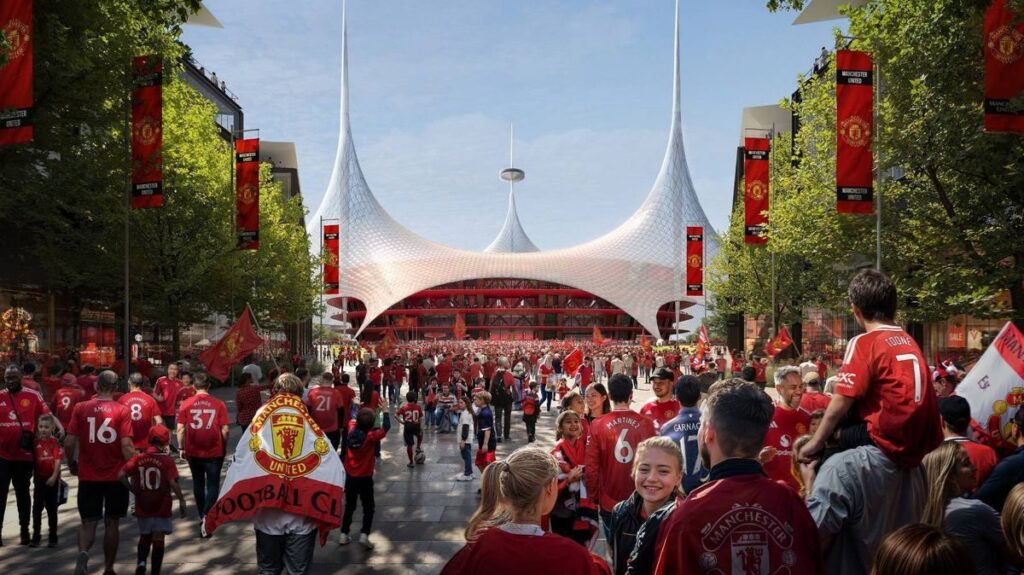
Manchester United have confirmed their proposed £2billion stadium development will be privately financed, ending speculation over potential taxpayer contributions.
The Premier League club intend to build a state-of-the-art, 100,000-capacity venue to replace the ageing Old Trafford.
Dubbed the ‘Wembley of the North’, the ambitious project was initially floated by co-owner Sir Jim Ratcliffe with suggestions that public funding could assist the build.
However, a spokesperson for the 20-time English champions told a recent fans’ forum that positive conversations are ongoing with potential private investors.
Infrastructure support remains a priority
While the Red Devils will foot the bill for the stadium itself, they continue to seek government assistance for surrounding transport links.
Collette Roche, the newly appointed chief executive officer for stadium development, emphasised the need for external help to ensure the site is accessible.
“There is no point building the biggest or the best stadium in the UK and it being on an island and you can’t get to it because the transport links aren’t there.”
Greater Manchester Mayor Andy Burnham previously clarified that public money would not be granted directly for the construction of the venue.
Mounting debts and land hurdles
Taking on the massive construction costs privately could further inflate the existing financial burden at the club.
Financial figures released in February revealed that the Manchester outfit’s debt is already approaching the £1.3bn mark.
The development also faces logistical challenges, including stalled negotiations to purchase a crucial rail yard adjacent to the current ground.
That land is owned by freight operator Freightliner, with the quoted asking price reportedly presenting a major obstacle to the expansion.
Euro 2028 snub highlights decline
The pressing need for modernisation comes after two decades of perceived neglect at the historic site.
Despite hosting the Champions League final in 2003, the venue was notoriously omitted from the UK and Ireland’s successful Euro 2028 bid.
Instead, cross-city rivals Manchester City will see their Etihad Stadium utilised for the tournament.
Former club captain Gary Neville described that particular venue snub as an all-time low for the organisation.