

VAR reform: UEFA chief demands unity on one controversial rule

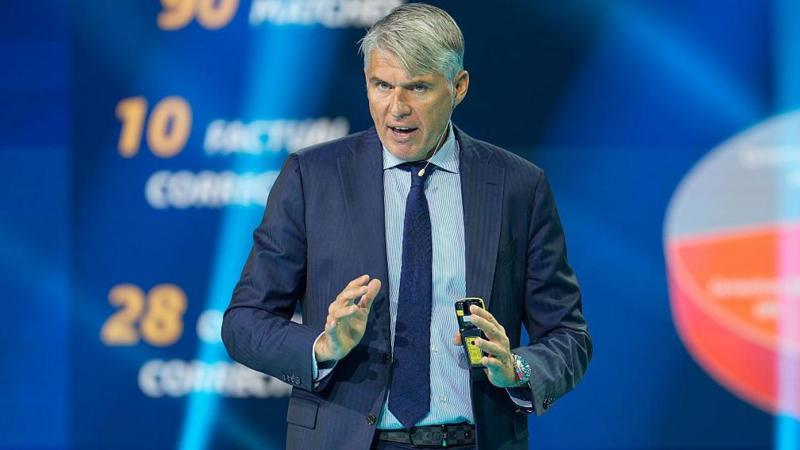
UEFA referees’ chief Roberto Rosetti has warned that football must avoid “microscopic” VAR interventions and urgently find a unified approach to handball.
Fighting forensic analysis
The Italian official insisted that the technology is becoming too intrusive during matches.
Speaking at the UEFA Congress, Rosetti argued that while the system works for factual decisions, it is struggling with subjective calls.
He believes the game is suffering from over-analysis of incidents that should remain clear and obvious.
“At the end of the season we need to speak about this. Because we cannot go in this direction of microscopic VAR interventions.”
“We love football like it is.”
The consistency crisis
Rosetti highlighted the stark disparity in intervention rates across Europe’s elite competitions.
The Premier League currently boasts the lowest rate at 0.27 reviews per game, though this has not prevented significant controversy.
In contrast, France’s Ligue 1 operates at a much higher frequency of 0.47 checks per match.
The Champions League also sees a high volume of interruptions, registering a ratio of 0.45.
The 56-year-old stressed that fans and media are increasingly frustrated by the lack of uniformity.
“We cannot forget why it is in place. It’s about justice.”
Solving the handball headache
A primary focus for the governing body is establishing a single definition for handling offences.
Interpretations currently vary wildly, with English football adopting a more lenient approach than its continental counterparts.
Rosetti warned that teams competing in European tournaments are being forced to adapt to different standards.
“We cannot speak different technical languages across Europe. It’s not good.”
“Only one uniformity and consistent interpretation. We are working for this.”
Preserving the flow
The referees’ boss also expressed scepticism regarding potential expansions of the video review remit.
The International Football Association Board (IFAB) is set to discuss reviews for corners and second yellow cards later this month.
However, Rosetti fears such moves would damage the intensity and emotion of the sport.
“If something is in place to delay the restart of play, I think it’s not good for football.”
Additionally, he dismissed Arsene Wenger’s proposed “daylight” offside rule change, warning it would create too much tactical space for attackers.