

Henry Patten details dramatic escape from Dubai following missile attacks

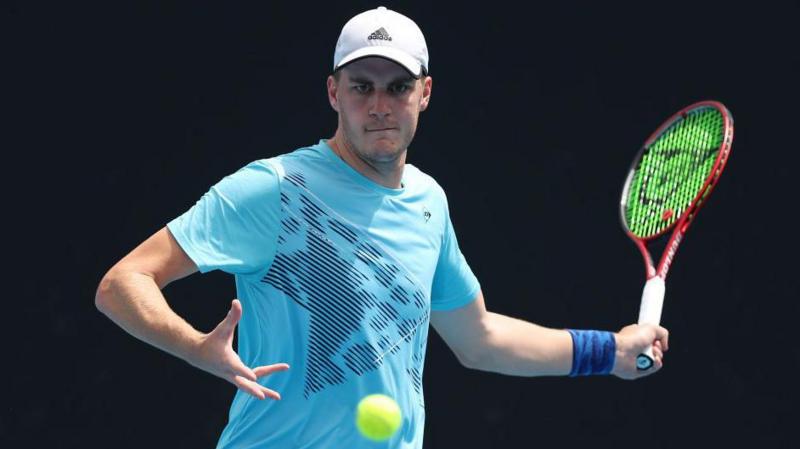
British doubles champion Henry Patten has returned to the UK after a harrowing week stranded in Dubai during the escalation of the Middle East conflict.
The 29-year-old was unable to leave the United Arab Emirates immediately following the Dubai Championships final as airspace closures disrupted travel across the region.
Patten and his playing partner Harri Heliovaara were among a group of 40 players and officials caught in the uncertainty as Iranian missiles targeted the area.
Explosions and fighter jets
The ordeal began last Saturday, when a fighter jet roared over the centre court just moments before the pair were due to contest the final.
Despite the unsettled atmosphere, the Grand Slam champions secured their second ATP title in as many weeks before the reality of their predicament set in.
Patten recounted hearing explosions from his hotel room while watching everyday life continue surrealistically around him.
Desperate to return home, the Briton spent 14 hours in a car attempting to cross the border into Oman, only for the journey to prove unsuccessful.
The situation intensified when he witnessed a drone strike a US consulate building located just minutes from the airport.
Anxious journey home
Eventually securing a flight back to London via Cairo and Rome, the self-confessed nervous flyer faced a terrifying departure.
“It was up to me to pluck up the courage to get on that flight out of Dubai airport the day after I saw the drone hit the US consulate building about five minutes away,” Patten told BBC Sport.
“It wasn’t particularly enjoyable, to say the least, but I didn’t really have much of a choice.”
The tennis star sat beside a non-English speaking passenger during the initial, tense leg of the extraction.
“We just looked at each other and gave each other a little nod and we were on our way. But certainly the first couple of hours on that flight were the longest couple of hours of a flight I have ever experienced.”
Surreal scenes at player hotel
Prior to his departure, the ATP had extended accommodation bookings and covered expenses for the stranded group.
Patten described a strange contrast between the geopolitical violence and the scene at the player hotel, where others continued to swim and play golf.
“If I didn’t have access to my phone, to the news and social media, I really don’t think I would have known there was a war going on,” he added.
“I would sit in my hotel room and watch people going to the pool. I would go to the pool.”
While Heliovaara remained with his family, Patten admitted the flight out was a significant mental challenge.
“Obviously as a tennis player I have to deal with that phobia an awful lot, and I’m generally pretty successful at it, but that flight was probably a step too far. I wouldn’t want to do that again.”