

Jannik Sinner deflects Wimbledon media protest questions amid prize money row

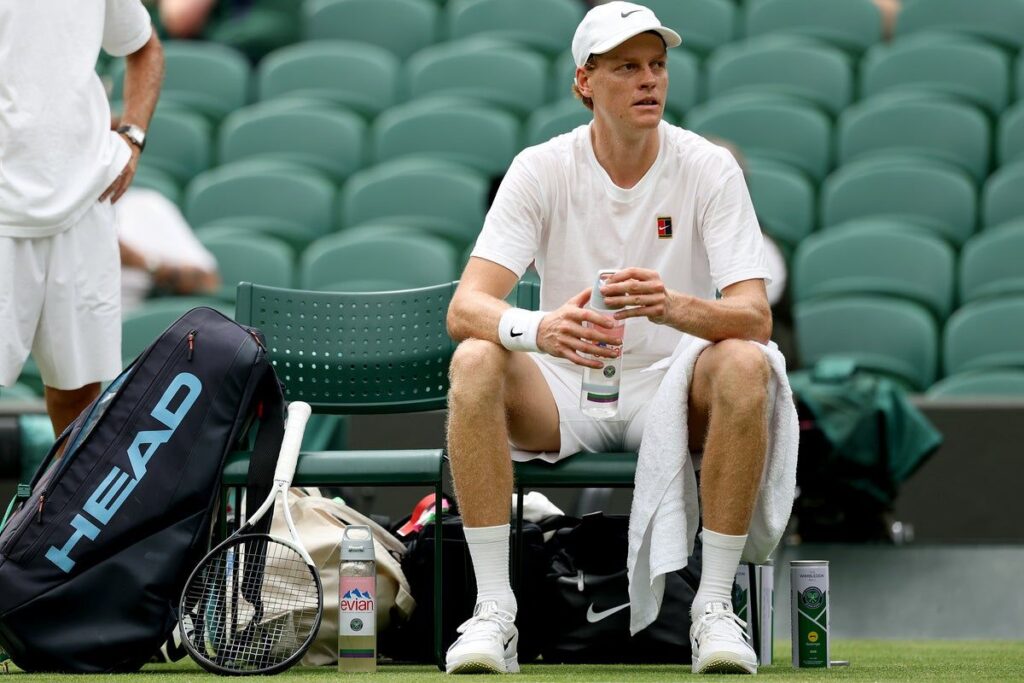
World number one Jannik Sinner has dismissed further questions regarding a player media boycott over prize money and welfare at Wimbledon after fractures emerged among leading competitors.
Several top professionals, including the Italian and Aryna Sabalenka, are pressuring Grand Slam organisers for increased financial compensation and a greater voice in tournament decision-making.
The group initiated their direct action at last month’s French Open by restricting pre-event media duties to just 15 minutes.
This specific time limit was chosen to symbolise the 15 per cent of tournament revenue that athletes estimate is broadly distributed as prize money.
Wimbledon response triggers escalation
The All England Club responded to player concerns by increasing their overall remuneration package by 20 per cent for this year’s grass-court championships.
Despite this significant financial boost, organisers were reportedly frustrated to learn that the media blackout would escalate during the opening week.
Campaigners are now demanding that 22 per cent of total tournament revenue is allocated directly to the players’ prize pot.
Protesting competitors intend to limit their post-match obligations to a brief press conference and two broadcast interviews lasting no longer than a quarter of an hour.
Sinner and Sabalenka stand firm
The reigning Australian Open champion restricted his English-speaking media duties to just six questions before shutting down the topic entirely.
He subsequently refused to explain why competitors had rejected Wimbledon’s proposal to establish a dedicated player council for welfare issues.
“I think it’s getting better, even though we are not at the point where we are 100 per cent happy.”
“It’s not about the money – not only about the money. It’s the whole scenario we take into consideration with welfare and everything else.”
While total tournament prize funds have more than doubled over the past decade, athletes maintain that these increases have failed to keep pace with soaring global revenues.
Two-time major winner Sabalenka described the recent financial adjustments as a positive starting point but urged organisers to reach a conclusive agreement.
“I really hope we can finally get to the table and really get it done, come to a conclusion that everyone is going to be happy with. I hope we’re not going to get to this boycotting again.”
Divisions emerge within player ranks
Advocates of the ongoing protest insist their primary motivation is to secure structural changes that will benefit lower-ranked professionals who struggle with gruelling tour expenses.
However, targeting the London major immediately following its proactive prize money hike has caused noticeable division within the locker room.
Australian number one Alex de Minaur and Germany’s Alexander Zverev are among the high-profile stars who have opted out of the Wimbledon action.
The Australian stated that while there was widespread unity among the playing group at Roland Garros, the current approach in London lacks unanimous support.