

Players hit out at ATP for playing UAE event during missile attacks

Tennis players have criticised the ATP for allowing a tournament in the United Arab Emirates to proceed while the region was under missile attack.
Explosions were heard outside a hotel in Dubai as the geopolitical situation in the Middle East escalated rapidly.
Competitors at an ATP Challenger tournament in Fujairah did not expect to take to the court after the UAE was targeted by Iranian missiles.
However, they were initially informed the event in the port city, a major global oil storage hub, was safe to continue.
McCabe questions safety decision
James McCabe was practising on court when fighter jets flew overhead and explosions resonated nearby.
“We expected to stay in shelter because that’s what the governments were advising,” the Australian told BBC Sport.
The region faced instability following US-Israeli strikes on Iran, which prompted retaliatory action.
Despite the volatile atmosphere, the governing body decided on Monday to continue with the schedule following discussions with local authorities regarding viability.
Tournament cancelled after oil terminal fire
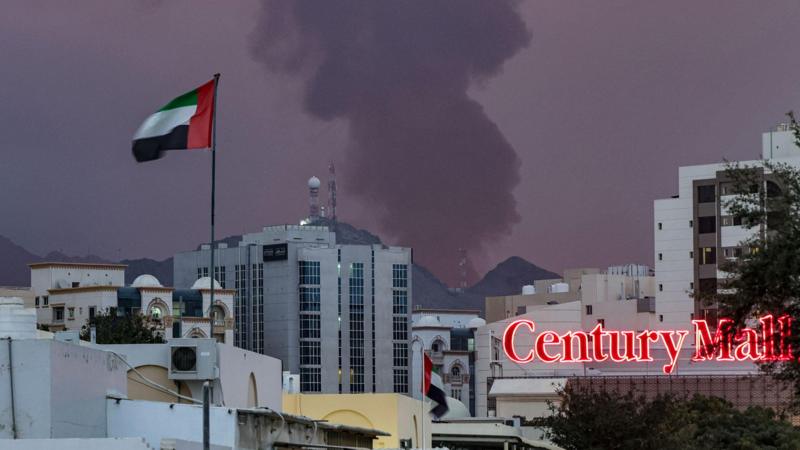
Panic ensued on Tuesday as athletes fled the courts when a nearby oil terminal was ignited by debris from a drone attack.
The event was subsequently cancelled, along with a second scheduled tournament at the same venue.
While most participants scrambled to find flights home, Russia’s Marat Sharipov and Uzbekistan’s Sergey Fomin remain stranded in the country along with their coaches.
McCabe, who has since returned to Sydney, expressed disbelief at the initial judgement call to play.
Financial strain on lower-ranked stars
“I don’t understand how it was decided the tournament was safe to go to in the first place,” McCabe stated.
The 21-year-old admitted he would have withdrawn immediately had the competition continued.
“After the oil refinery was hit, it was still in the air that we could be going back on the court the next day – that was the scary part,” he added.
This disruption has caused significant stress for players largely ranked outside the top 200, who often struggle financially to sustain their careers on the tour.
The ATP insisted safety was their priority and that extra security measures had been implemented behind closed doors.
In a statement, the organisation said it remains in “close contact” with those still affected by the travel chaos.