Finland Reviews 50 Gambling Licence Applications Ahead of 2027 Market Opening
Finland Receives Around 50 Gambling Licence Applications – Veikkaus Tightens Loss Controls Before Monopoly Ends
Key Takeaways
– Finland’s National Police Board has received about 50 gambling licence applications under the new regulatory framework.
– Each applicant must pay a 29,000 euro processing fee for licences valid in 2026 before a full review begins.
– Most applicants are foreign companies, increasing the complexity of regulatory checks.
– Veikkaus has introduced age-based annual loss checkpoints ahead of the planned end of its online monopoly in 2027.
– Industry representatives say further detail is still needed on bonuses, advertising rules and black market controls.
Regulator Reviews Around 50 Applications Under New Licensing System
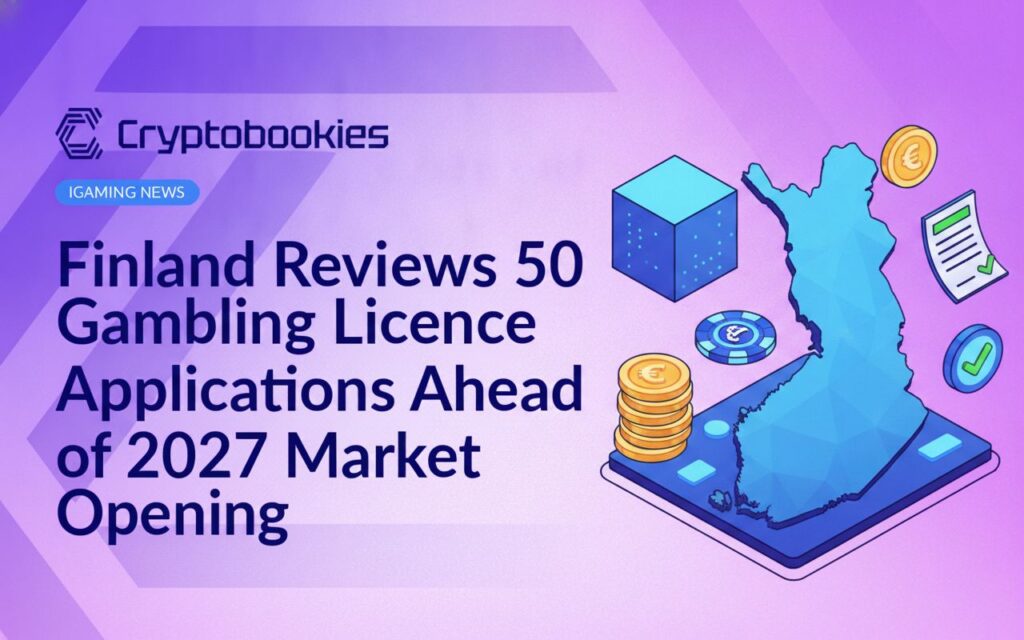
Finland has started reviewing approximately 50 licence applications as it prepares to move from a monopoly model to a licensed online gambling market. The National Police Board is overseeing the process after the country passed its iGaming bill in January.
By 30 March, 24 operators had formally applied. Since then, the total number of submissions has risen to around 50. Before a full review can begin, each applicant must pay a processing fee of 29,000 euro for licences that will be valid in 2026.
According to Juha Katainen, senior advisor at the National Police Board, the majority of applicants are foreign companies. He stated that this increases the complexity of processing and evaluating submissions. Regulators are reviewing corporate register extracts, certificates, financial documents and other reports to assess reliability and suitability.
The authority is also examining affiliated companies when their financial position could affect licensed operations. This broader review is designed to test compliance standards, funding strength and potential money laundering risks before the competitive market opens.
Transition From Monopoly to Licensed Online Market in 2027
Finland’s reform will end the online betting and gaming monopoly of Veikkaus in 2027. Under the new framework, online betting and gaming will move to a competitive licensing system, while lottery products and some land-based offerings will remain outside the new model.
The current application phase marks a critical step in that transition. For international operators, the review process determines who will be able to enter the Finnish market once private competition is permitted. For users, the licensing regime will define which operators are authorised to offer services locally under Finnish rules.
At the same time, key operational details remain under discussion. Jarkko Nordlund, head of iCasino and sportsbook at Veikkaus, said operators are seeking clarification on how certain provisions of the law will be interpreted. He highlighted open questions around bonuses, advertising, permitted media channels, duty of care obligations and player protection requirements.
Nordlund noted that while there is broad support for a licensed market, companies want more detailed definitions of how the law will apply in practice.
Veikkaus Introduces Age-Based Loss Checkpoints
As the monopoly period approaches its end, Veikkaus is tightening its responsible gambling framework. The company has introduced a phased safety system based on age-specific annual loss checkpoints.
For players aged 18 to 19, the first checkpoint is set at 4,000 euro in annual losses, with a total annual loss limit of 8,000 euro. Players aged 20 to 24 reach a first checkpoint at 8,000 euro and an annual loss limit at 24,000 euro. Customers aged 25 and older face a first checkpoint at 24,000 euro, but no fixed annual loss cap.
Once a player reaches a checkpoint, they cannot continue playing until they have a care conversation with a Veikkaus specialist. According to Susanna Saikkonen, director of sustainability at Veikkaus, the customer’s situation is assessed under a pre-agreed operating model. If play is allowed to continue, the next loss checkpoint can be agreed with the customer.
Saikkonen said lower limits for younger customers reflect their financial and life situations, which may still be developing. The company aims to use real-time data to identify harmful gambling patterns more effectively and to provide proactive care communication.
The new rules apply across Veikkaus gaming products. However, slot machines and table games at Casino Helsinki are subject to separate controls.
Concerns About Black Market Controls and Market Structure
While the licensing process is under way, questions remain about enforcement against unlicensed operators. Nordlund stated that there is currently no real mechanism to block payments or otherwise restrict operators that remain outside the licensed system.
This issue is relevant for both regulators and licensed companies. Without clear controls, unlicensed providers could continue targeting Finnish players after the market opens, potentially affecting channelisation into the regulated system.
Beyond regulation, Veikkaus may also face a broader ownership debate. Industry consultant Jari Vähänen estimated that the entire company could be worth up to 4.5 billion euro, based on a ten times multiple of its reported 450 million euro annual gaming surplus. He valued digital verticals such as online casino and sports betting at between 1 billion and 1.5 billion euro, while Lotto and gaming machines could account for about 3 billion euro.
These estimates highlight the scale of the state operator as Finland prepares to introduce competition in online segments.
Our Assessment
Finland is advancing its shift from a monopoly system to a licensed online gambling market, with around 50 applications currently under review. The regulator is conducting detailed checks on financial stability and compliance before granting licences valid from 2026. At the same time, Veikkaus is tightening age-based loss controls ahead of the planned end of its online monopoly in 2027. Open questions on advertising rules, bonuses and black market enforcement indicate that further regulatory clarification will shape how the new competitive market operates in practice.